Plot Area, Carpet Area and Saleable Area
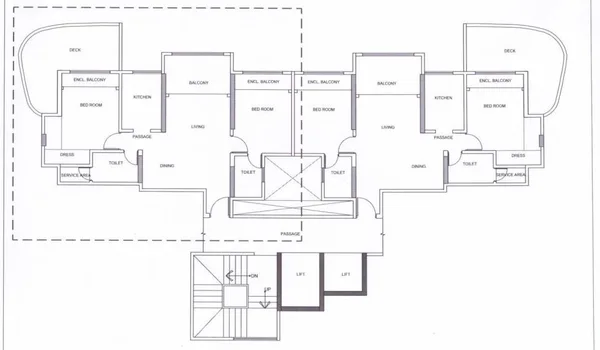
Plot area, carpet area and saleable area are three different measures of the same villa, and the price is quoted on whichever one the seller chooses. That is why a rate is not a price: it is a fraction whose denominator the seller picks, and more money is lost in Indian real estate to a misunderstood area definition than to almost anything else. The pattern is familiar: two projects at ₹9,000 and ₹13,500 per sq.ft., a buyer concludes the first is cheaper, and the only question that matters never gets asked, per square foot of what? What follows sets out the definitions, works through a real example, and ends with a short checklist for taking a quotation apart.
The Four Numbers
Plot area
The land: a rectangle with dimensions, a survey number and boundaries, described in the sale deed. At Nambiar Beverly Green the 40 × 63 ft plot comes to 2,520 sq.ft. and the 35 × 55 ft plot to 1,925 sq.ft. Of every number in the transaction this is the least ambiguous, and it gets the least attention.
Carpet area
This is the one area with a statutory definition behind it. Section 2(k) of the Real Estate (Regulation and Development) Act, 2016 defines carpet area as the net usable floor area of an apartment, excluding the area covered by external walls, areas under service shafts, and exclusive balcony, verandah or open terrace areas, but including the area under internal partition walls. In short, the floor you can actually stand on. RERA requires apartments to be sold and quoted on that basis.
Built-up area
Carpet area with the walls added, and usually the balcony too. It carries no statutory definition and is used loosely.
Saleable or super built-up area
This is the commercial number: built-up area with a proportional share of common elements loaded onto it. RERA does not define it. In an apartment it usually lands 25 to 35% above carpet area. In a villa scheme the developer defines it, and the definition shifts from project to project, which is exactly why rates across projects are not comparable until both definitions are in front of you.
Villa buyers should note one caveat. The carpet-area mandate in RERA was written with apartments in mind. A villa on its own plot is a different product, and schemes of this type are routinely quoted on a developer-defined saleable area instead. There is nothing improper in that, but the number is not standardised, and the burden of asking falls on you.
What the Ratio Does to a Quote
Here is the arithmetic on the actual configurations at Nambiar Beverly Green.
- A 40 × 63 plot of 2,520 sq.ft. carries a saleable area of 4,627 sq.ft. east facing or 4,638 sq.ft. west facing, a ratio of about 1.84×.
- A 35 × 55 plot of 1,925 sq.ft. carries 3,732 sq.ft. west facing or 3,782 sq.ft. east facing, about 1.94× to 1.96×.
Take the larger villa and apply the indicative rate of ₹13,499 per sq.ft. of saleable area to it. On saleable area the sum reads 4,638 × ₹13,499 ≈ ₹6.26 Cr. On plot area, which is what a reader who had wrongly assumed the rate applied to land would use, it reads 2,520 × ₹13,499 ≈ ₹3.40 Cr.
One rate, one villa, and roughly ₹2.9 Cr between the two answers, the denominator was the only thing that moved. That is the entire lesson. The ratio itself is unremarkable: a G+2 house on a compact plot has three levels, so a saleable area close to twice its land is what you would expect. The failure comes from carrying a rate between projects without carrying its definition too, which makes the comparison meaningless.
The same error runs the other way just as often, and there it works in the seller's favour. A low headline rate may be applied to a generously defined saleable area; a higher one may be applied to a tighter definition. Only one comparison holds up: total price against total delivered house, never rate against rate.
How to Take a Quotation Apart
- Ask which area the rate applies to, and get the definition in writing. "Saleable area" on its own is not an answer. Ask what is included in it and in what proportion.
- Ask for the plot area separately, with dimensions and the survey number, and check it against the plan and eventually the deed. This is the number your land value rests on.
- Ask for carpet or built-up area as well. If a developer can state saleable area to the square foot but cannot state carpet area, that is informative in itself.
- Recompute the rate yourself against each denominator. Total price divided by plot area, and divided by saleable area, gives you two very different rates. Compare projects only on the same one.
- Separate the rate from the charges. A quotation is rarely just area × rate. At this project the basic sale value is built as saleable area × rate, plus a development and infrastructure charge, plus a preferential-location charge where one applies, with 5% GST on the total. Registration, stamp duty and maintenance are outside that figure. Ask for each line separately, and ask which are already inside the headline number, assuming a charge is extra when it is already included overstates your cost, and assuming the reverse understates it.
- Check the numbers survive into the documents. The areas in the cost sheet should match the areas in the allotment letter, in the agreement to sell, and, once a project is registered, in its filings on the Karnataka RERA portal. If they diverge, the document governs, not the cost sheet.
Two Things Saleable Area Does Not Drive
Take stamp duty and registration first: they are computed on the consideration or on the applicable guidance value for the property, not on a saleable-area figure invented for pricing. Property tax is the second: the local authority assesses it on a basis of its own. Neither cost rises mechanically with a high saleable-area multiple. What does rise is anything charged per square foot of saleable area, and at this project maintenance is charged that way₹48 per sq.ft. for the first year including 18% GST, with a deposit of the same amount. Across a 4,638 sq.ft. villa that is a recurring cost worth modelling before you sign.
The Short Version
Two numbers make a rate, and the first should never be accepted without the second. Ask what the denominator is. Get the definition in writing. Recompute the rate both ways. Then compare total price against total house and nothing else. That one habit reveals more about a project's pricing than any market report will.
Where to Go Next
Plot sizes and saleable areas by configuration are on the villas page; the full cost stack for this project, including what the headline figure already absorbs, is on the Nambiar Beverly Green price page. The blog indexes the other explainers. Every figure quoted here is indicative and subject to change.
Explore Nambiar Beverly Green