South Bangalore as a Property Market
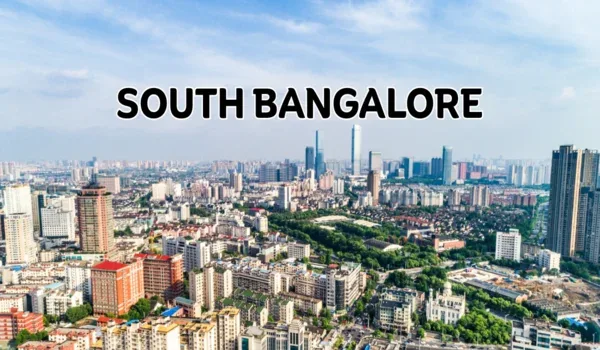
One property market, one price trend: that is how Bengaluru is usually discussed, and it is a convenient fiction. What the city actually holds is three or four largely separate markets that happen to share a municipal boundary, and what separates them is the kind of place each one is, not price alone. The oldest and most residential of them is South Bangalore, and a buyer gets more out of understanding what that means than out of any index.
What follows describes the character of the south as a market, and how that character differs from the city's eastern and northern growth corridors. You will find no appreciation percentages here, no growth rates and no comparative price statistics. Numbers of that kind do exist on the listing portals, but they are revised quarterly, they track asking prices rather than transactions, and repeating them on this page would lend them a precision they do not have.
How Bengaluru Splits by Direction
Employment is what gave each direction its character. From the 1990s onward, software and services gathered in the east and south-east, Whitefield, the Outer Ring Road tech belt, Electronic City. In 2008 the airport moved north and pulled a corridor of development up Bellary Road behind it. The south had no such moment, because it was already built: it had been Bengaluru's residential heart long before any of that, so it grew outward from an established base rather than being created out of farmland.
Origin still explains more about the south than anything else does. Across the east and the north, a great deal of housing went up where nothing had stood before, on the strength of a projected employment or infrastructure story. The south's new supply is different in kind: either infill inside an existing suburb, or an outward extension along one of four or five arterial roads whose inner sections have been residential for decades.
What Characterises the South
An older, denser residential fabric
Few neighbourhoods in the city are as established as Basavanagudi, Jayanagar, JP Nagar, Banashankari and Padmanabhanagar. Mature tree cover, planned street grids in parts, local retail older than organised retail, and a resident population that has been in place for more than one generation: that is the fabric. The housing stock itself is old, independent houses on small plots and low-rise apartments, and anything new inside these areas is limited to redevelopment.
Institutions rather than campuses
Where other parts of the city are anchored by corporate campuses, the south is anchored by civic and educational institutions. The Jayadeva Institute of Cardiovascular Sciences, NIMHANS, Bangalore Medical College, IIM Bangalore, Christ University, the Lalbagh and Bugle Rock precincts, the National College belt, those are the landmarks people navigate by. The daily rhythm that produces is unlike a tech-park suburb's, where movement compresses into two peaks and the streets empty at weekends.
A genuinely green outer edge
Here is the south's real structural advantage. Turahalli forest, the Bannerghatta National Park country and the wooded land beyond the NICE Road give the outer south a landscape no other direction in Bengaluru has. That same geography is why the south's outer corridors remain the place where large low-density formats are still possible.
Multiple corridors, not one
No single spine serves the south. Several arterials do, Bannerghatta Road, Kanakapura Road, Mysore Road, Hosur Road and the Electronic City corridor, all tied together by the Outer Ring Road and the NICE Road. Price levels differ between them, so does the commuting logic, so does the supply profile, and treating the set as one market is always a mistake.
How That Differs from the East and the North
Employment leads the eastern corridors, Whitefield, the ORR tech belt, Sarjapur Road. Demand there moves closely with what the technology sector is doing, supply runs to large apartment projects built for that workforce, and tenant demand and rental yields are correspondingly deep. Liquidity is the gain: a standard product finds more buyers and more tenants. The cost is that one industry's hiring cycle carries the market with it, and that traffic on those corridors follows from the same concentration.
Infrastructure leads the northern corridor running up Bellary Road toward Devanahalli. The airport built it, together with the elevated expressway, the aerospace and hardware parks and a large volume of planned land. What resulted is newer and lower in density, weighted toward land-based product, and resting on infrastructure still to be delivered rather than on a resident base already there.
South Bengaluru answers to neither description. Its demand comes from people already living in the south who intend to stay there, trading an apartment in JP Nagar for a house further out, or moving a family nearer the schools and hospitals it already uses. A comparatively self-referential market follows from that: less exposure to any one employer or sector, and equally less prospect of the sudden repricing a new tech park or a new expressway can produce elsewhere.
What This Means for a Villa Buyer
Large contiguous land is what large low-density homes require, and in Bengaluru such land is available only at the outer edge of a corridor. In the south that edge is the stretch past the NICE Road toward Bannerghatta, which is why villa communities appear there and essentially nowhere closer in. Anyone looking at this format in the south is therefore buying at the outer end of a corridor rather than inside a mature suburb. That is a definition, not a criticism.
That is a real trade and it is worth stating plainly. On the gain side: space, a green setting, and a low-density street pattern that a mature inner suburb cannot supply at any price. On the other: walkable local infrastructure, established municipal services and short travel times, all given up, with the operating cost of a large house taken on. Do not assume the commute, measure it. From the southern reach of Bannerghatta, the six tech parks carrying measured figures run from Primeco Towers at 10.6 km and 29 minutes by car out to AKR Tech Park at 18.9 km and 46 minutes, and the order of the minutes is not the order of the kilometres: Velankani at 14.8 km takes 33 minutes, while Kalyani Magnum at 11.7 km takes 45. Those times are typical and vary with traffic and time of day. What the southern corridors offer is that same trade in a setting most buyers find pleasanter than the equivalent trade in the east or north, but the trade itself does not change.
Exit is the second consideration. Anywhere in Bengaluru, homes in the five-to-seven-crore bracket draw on a thin pool of buyers. In the south that pool is drawn substantially from the south itself, so resale rests on the corridor continuing to appeal to people who already live nearby. Set against the east's, the dynamic is slower and steadier, and it is slower and steadier in both directions.
What This Guide Avoids
No appreciation figure for south Bengaluru last year appears on this page, and no numerical comparison with Whitefield or Devanahalli. Figures of that kind come from listing dashboards that measure asking prices, mostly for apartments, and they are revised often enough that quoting one would date this page the moment it was written.
Where you do want the numbers, collect them at the moment you decide and from more than one place: the locality dashboards on the major portals will give you a direction of travel, and Karnataka's Kaveri Online Services will tell you what property in a specific survey area actually registered at. The second takes more work than the first and is worth considerably more.
For Nambiar Beverly Green and its own position in the south, together with indicative pricing, see the price page. Further guides to the corridor and to the buying process are indexed on the Nambiar Beverly Green blog.
Explore Nambiar Beverly Green