Bannerghatta National Park
Bannerghatta National Park is the green anchor at the southern end of Bannerghatta Road. It covers 260.51 sq km, with the 731.88-hectare Bannerghatta Biological Park carved out of it and the Nature Camp run by Jungle Lodges & Resorts, 3 km from Nambiar Beverly Green.
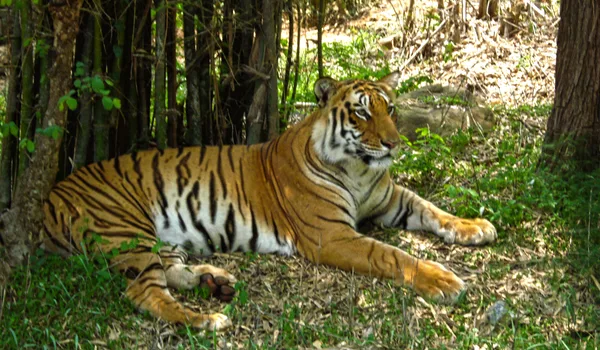
What makes this end of the corridor different from every other Bangalore arterial is Bannerghatta National Park, and it is the honest differentiator for Nambiar Beverly Green. Founded in 1970 and declared a national park in 1974, it covers 260.51 sq km and runs contiguous with the Talli reserve forest to its south-east and the Bilikal forest to its south, forming part of a wildlife corridor used by elephants that connects the BR Hills and the Sathyamangalam forest. Because Bannerghatta Road runs into that rather than into the next suburb, the built city has a permanent southern limit on how far it can spread down the corridor. On that reach, at Bilwaradahalli, the project stands 3 km from the Bannerghatta Nature Camp, a measured distance, as are the ten school distances on the schools page, the eight hospital distances on the hospitals page, and six mall and six tech-park distances on the location pages. Three metro-station distances are measured and published too, 12.5 km to Yelachenahalli and to Silk Institute, both operational, and 6.3 km to Kalena Agrahara, which is not open yet. Electronic City lies 15 km away, 30 min by car, 30 min by bike, and Kempegowda International Airport 68 km away, 2 h by car, 1 h 58 min by bike. Three BMTC bus stops complete the set: 190 m to Bilavaradahalli Cross, which is limited at about fourteen departures a day; 1.5 km to Bilavaradahalli and 2.3 km to Bannerughatta Circle, which carry the frequent Majestic routes. No landmark this website names is left without a measured distance.
The Park, the Biological Park and the Nature Camp
Property marketing uses three names interchangeably and they do not refer to the same thing. Straightening them out is the first step toward judging what the green edge here is actually worth.
Bannerghatta National Park
The protected area itself: 260.51 sq km of dry deciduous and scrub forest and hill country south of the city, founded in 1970 and notified as a national park in 1974, contiguous with the Talli and Bilikal forests and part of a working elephant corridor. The Karnataka Forest Department administers it. Access to the park proper is limited and regulated, this is not open parkland, and nobody should imagine an amenity to be walked into. Pressure on it is real as well: published analysis records that the dry deciduous forest within the park shrank by roughly 44% between 1995 and 2021, and that is context worth carrying when you read anyone's claims about permanence.
Bannerghatta Biological Park
A portion of the park was carved out in 2002 as a zoological establishment, the Bannerghatta Biological Park, covering 731.88 hectares within the Anekal revenue taluk of Bangalore Urban district. What the public actually visits is this: the zoo, the safari, lion, tiger and bear, the butterfly park and the rescue and rehabilitation centre. India's first Butterfly Park opened here in 2006 across about 7.5 acres, developed with the Zoo Authority of Karnataka, the University of Agricultural Sciences Bangalore and the Ashoka Trust for Research in Ecology and the Environment.
Bannerghatta Nature Camp
The camp run by Jungle Lodges and Resorts on the Biological Park campus. Its published address: Bannerghatta–Kagalipura Road, near Hakki-Pikki Colony, Bannerghatta, Bangalore 560083. Tented and log-hut accommodation, safaris and naturalist-led herbivore treks are what it offers, and it is the landmark anchoring this project's verified distance on the park side: 3 km from the site at 12.823744° N, 77.571837° E. No other single fact describes the address as well, three kilometres from a forest camp, on a road that still runs city buses.
Living Near the Park Edge
A forest boundary is usually presented in property marketing as pure upside. It is nothing of the kind: what it brings is a set of specific advantages together with specific constraints, and a buyer paying villa prices deserves to hear both.
What it gives you
- A ceiling on sprawl. The road terminates in protected forest, so the southern reach cannot fill in the way that comparable distances on other arterials have. Green here is structural, not landscaped.
- Air, quiet and sightlines that are measurably different from the built stretch of the corridor, the practical, everyday benefit of low density and a large forest block upwind.
- Weekend life on the doorstep. The Biological Park, the safari and the butterfly park become a standing family outing rather than an annual trip.
- A recognisable address. Bannerghatta is a name buyers and tenants already know, which matters for resale and for letting.
What it costs you
- Weekend traffic. The road carries visitor traffic toward the Biological Park that it does not carry midweek. Plan Saturday and Sunday errands accordingly.
- A live human–wildlife interface. This is a working elephant corridor landscape; the Forest Department manages it actively and it is a real feature of the region, not a brochure flourish.
- Regulatory sensitivity. Land near a protected area carries planning and environmental constraints that land in the middle of a city does not.
- Distance from services. Hospitals, malls and the metro terminus under construction are all north of you, and there is only one road to them. See the hospitals page and the connectivity page.
The Wider Green Belt on This Side of the City
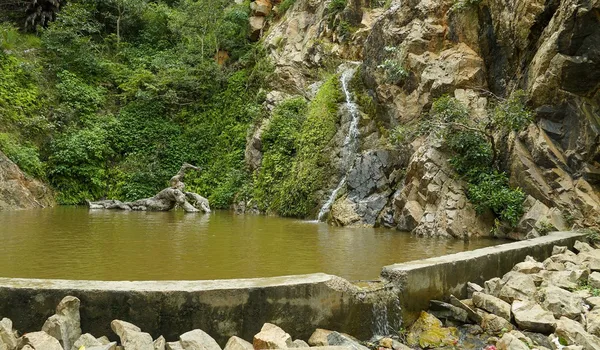
An isolated patch is what Bannerghatta is not. State Highway 87 carries on past the park toward Jigani and Anekal, and past Anekal is Muthyala Maduvu, Pearl Valley, a small waterfall and wooded valley that makes an easy half-day trip from this end of the corridor. To the south the national park runs contiguous with the Talli reserve forest and the Bilikal forest, so the green does not stop where the park boundary stops on a map. That is the practical reason the southern reach of Bannerghatta Road reads differently from the rest of urban Bangalore: land use to the south is forest and plantation for a long way, and geography and protection status are what produce it, not any developer's landscaping.
Visiting, Practically
Take the safari and the butterfly park together and the Biological Park is a full day; weekends and school holidays are the busiest. The Zoo Authority of Karnataka sets timings, entry and safari booking, and these change from time to time, check the Biological Park's own site before you go instead of relying on any third-party listing. Booking for the Nature Camp goes through Jungle Lodges and Resorts. If you are visiting the project, nothing else you can do afterwards will tell you as much about the address as going on to the camp; it is the one measured distance on this site, and it is worth experiencing rather than reading.
How This Should Weigh in a Purchase Decision
Genuine and structural: the green edge is both, which is more than most Bangalore projects can say about their surroundings. A substitute for diligence it is not. Treat the forest as the reason the locality will keep its character, and treat the service position, hospitals, schools, metro, on its own merits, set out on the hospitals, schools and connectivity pages. For the locality itself see the Bilwaradahalli page, and for the address, coordinates and corridor overview the location page.
*One measured distance appears on this page, 3 km to the Bannerghatta Nature Camp; the measured school distances are on the schools page. Park figures are as published by the sources cited.
Frequently Asked Questions
1. How close is Nambiar Beverly Green to Bannerghatta National Park?
3 km to the Bannerghatta Nature Camp, the Jungle Lodges and Resorts property on the Biological Park campus, is what we publish on the park side. No distance to the park boundary itself is published, because the boundary is not a single point.
2. What is the difference between the national park, the Biological Park and the Nature Camp?
The national park is the protected area, 260.51 sq km. The Biological Park is the 731.88-hectare zoo and safari campus carved out of it in 2002, what visitors actually enter. The Nature Camp is the Jungle Lodges and Resorts property on that campus.
3. What is it actually like to live near a national park edge?
You gain a hard ceiling on sprawl, better air and quiet, and a standing weekend outing. It costs you heavier weekend visitor traffic, a live human–wildlife interface the Forest Department manages, regulatory sensitivity near a protected area, and a drive north for hospitals.
4. Will the forest stay?
Yes in the structural sense: the road terminates in the protected area, so the limit on southward sprawl is real. Published analysis records dry deciduous forest inside the park shrinking by roughly 44% between 1995 and 2021. Buy for the geography, verify the regulation.
Explore Nambiar Beverly Green